APST 4.1 Support student participation
Topic 8 Inclusivity and diversity: Inclusive play and removing barriers to engagement
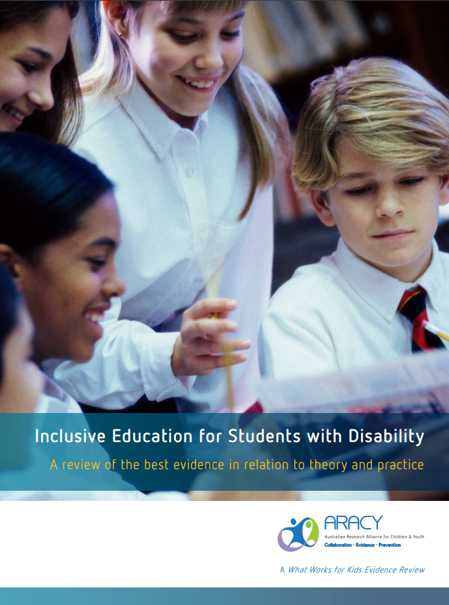
Resource: Australian Research Alliance for Children and Youth (Forlin et al., 2013), is text written for teachers for inclusive education, theory and practice for students with a disability.
Supporting inclusive participation is central to my identity as an inclusive kindergarten teacher, I strongly believe every child deserves to feel they belong and can contribute. The EYLF V2.0 principle of equity, inclusion and high expectations asks teachers to recognise and respond to barriers that limit participation (Australian Government Department of Education, 2022). I selected Forlin et al. (2013) a review of inclusive education because it produces evidence and resources on flexible grouping, adapting environments and building on children's strengths (Figure 7), a drive for systemic change, collaborate with communities, and amplify young voices to create a healthier future. Forlin et al. (2013) focuses on prevention, early intervention, and equity. Cologon and Mevawalla (2023) show how inclusive play can be designed so that all children participate together rather than alongside, and Fleer (2021) positions play as a site for social justice. This is supported by Kessler and Swadener (2019) which emphasise on listening to the children's own views about how they participate. Commissioned by the Australian Research Alliance for Children and Youth, this review grounds my inclusive practice in research, helping me plan experiences that are inviting and accessible for every child (Forlin et al., 2013).
Create Your Own Website With Webador